Please ensure Javascript is enabled for purposes of website accessibility

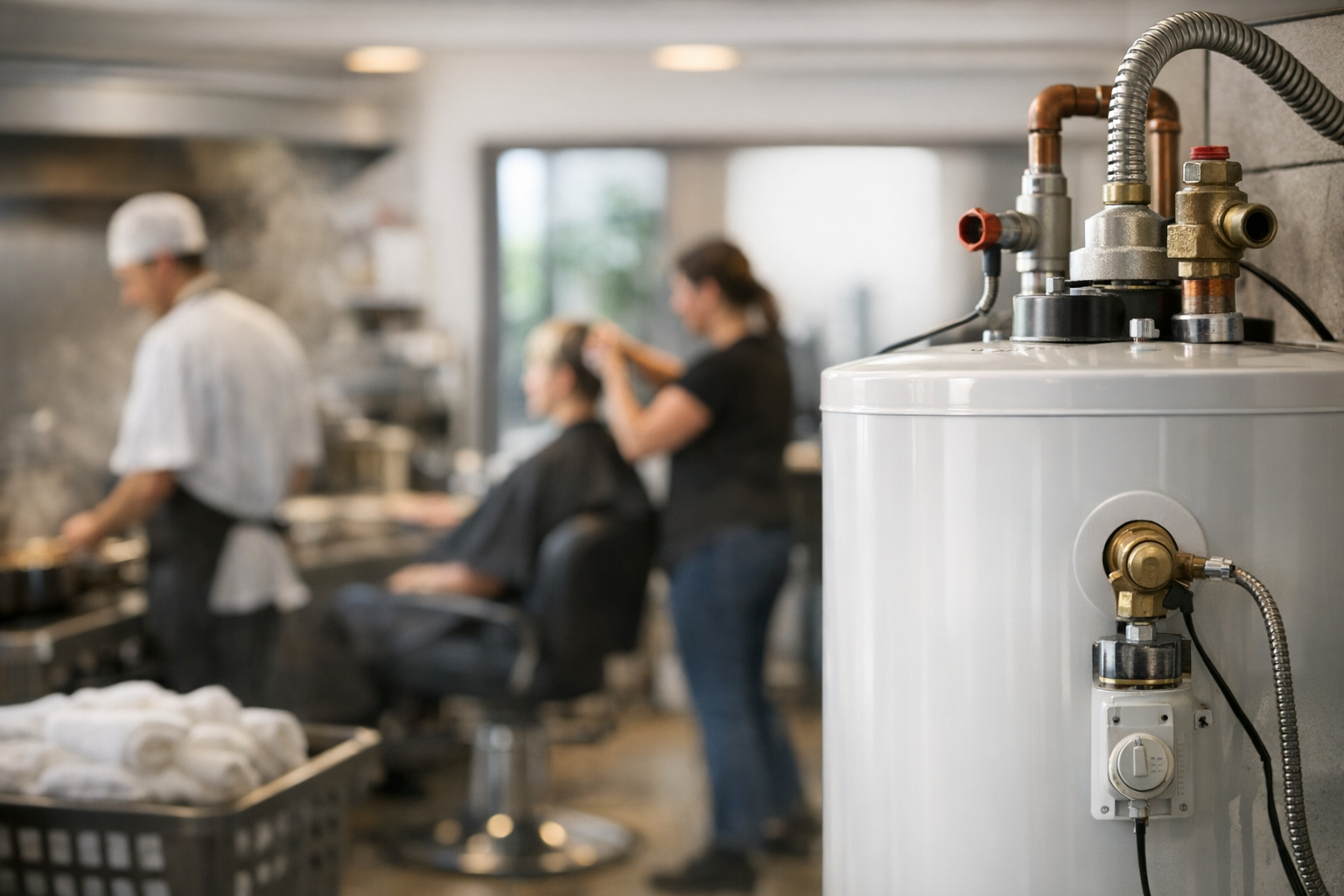
Why Your Hot Water Runs Out Faster in Spring and What It Means

If your hot water seems to disappear faster once spring rolls around, you are not imagining it. A lot of small business owners notice this shift and assume the water heater is getting old or something is broken. Sometimes that is true. But often, the cause is less dramatic and easier to fix.

Spring brings changes in water temperature, usage patterns, and even how hard your system has to work. That matters whether you run a small office, a salon, a restaurant, a shop, or a rental property. When hot water runs out faster, it can slow down your business, frustrate employees, and create avoidable service calls.

For businesses in Counce, TN, Savannah, TN, Cherokee, AL, Iuka, MS, and Corinth, MS, this is a common seasonal issue. And if you are searching for plumbing help near me, it helps to understand what is going on before the problem turns into downtime.

Why spring changes your hot water supply

One big reason hot water seems to run out faster in spring is incoming water temperature. During colder months, the water entering your tank is much colder. By spring, that water starts warming up a little, but the change is not always as simple as it sounds.

As the seasons shift, your water heater may cycle differently. Sediment buildup, aging parts, and poor efficiency become more noticeable when demand changes. A system that felt fine in winter may suddenly struggle once the workload changes at your business.

There is also a practical side to this. In spring, many businesses increase cleaning, add seasonal employees, and prepare for more customer traffic. That means more handwashing, more dishwashing, more laundry, and more demand on the same tank.

It is not always the heater’s fault

Before assuming your unit is failing, look at how the building is being used. A small café in Savannah, TN might be using more hot water for cleaning prep areas and washing dishes now that the tourist season is picking up. A salon in Corinth, MS may be washing more towels as appointment volume increases. A shop in Cherokee, AL might have staff back on-site more often, which adds to bathroom and breakroom use.

That kind of increased demand can empty a tank faster even if the water heater is still working. In other words, the problem may be usage, not just equipment.

Still, if your hot water disappears much sooner than it used to, there is a good chance your system needs attention.

Common reasons hot water runs out faster in spring

Several issues can make a water heater feel weaker this time of year:

  • Sediment buildup inside the tank reducing capacity and heating efficiency

  • A failing heating element or burner that cannot keep up with demand

  • A thermostat that is set too low or not reading correctly

  • Hot water usage increasing as your business gets busier

  • A tank that is too small for the building’s actual needs

  • Poor insulation on pipes or the tank itself, causing heat loss

Some of these are quick fixes. Others point to a bigger decision, like repairing or replacing the water heater before the next busy season.

What this means for your business

Hot water problems do more than create inconvenience. They can affect the way customers see your business and the way your team works.

If you own a restaurant in Iuka, MS and the kitchen runs out of hot water during lunch prep, staff may have to slow down or stop operations until the system catches up. If you run a hair salon in Savannah, TN, inconsistent water temperature can interrupt service and create a bad customer experience. If you manage a small office in Counce, TN, even a simple issue like weak hot water in the restroom can reflect poorly on the entire property.

That matters for your online reputation too. Customers do not always leave a review about a water heater directly, but they do mention comfort, cleanliness, and reliability. Those details affect local SEO performance, your business profile, and the kind of lead generation you get from search. When people look up local businesses near me, they often compare reviews, photos, and service quality before they ever make a call.

How to tell whether the problem is getting worse

There is a difference between a small seasonal change and a water heater that is on its last leg. If you notice one warm shower running out a little earlier than usual, that may just be spring demand. If hot water is suddenly limited across the building, that points to a bigger issue.

Watch for these warning signs:

  • Water takes longer to heat up than usual

  • The supply feels inconsistent from one use to the next

  • There are rumbling or popping sounds from the tank

  • Water looks rusty or has a strange smell

  • Your utility bills are creeping up without a clear reason

  • The water heater is over 8 to 12 years old and has not been maintained regularly

If several of these show up at once, the system should be checked sooner rather than later.

A real local example

Take a small family-owned bed and breakfast in Corinth, MS. Spring is a busy time. Guests come through for weekend trips, local events, and fishing season. The owner notices that morning showers are cutting it close, and the kitchen is running out of hot water while breakfast is being prepared.

At first, it feels like a simple nuisance. But after a quick inspection, the issue turns out to be sediment buildup in an older tank and a thermostat that is not holding temperature consistently. The property had also added a cleaning service, which increased hot water use behind the scenes.

That same kind of issue can hit a café in Iuka, MS, a retail shop in Cherokee, AL with an employee breakroom, a professional office in Savannah, TN, or a small equipment shop in Counce, TN. In every case, hot water problems affect operations, customer comfort, and the way the business appears online. If someone is searching your business near me and sees complaints about cleanliness or service speed, that can impact trust before they ever call.

What smart business owners should do next

If your hot water is disappearing too fast, do not wait for a full failure. A little attention now can prevent a costly interruption later.

  • Check how much hot water your business is using on a typical spring day

  • Look for signs of sediment, leaks, or temperature inconsistency

  • Ask whether your water heater is sized correctly for current demand

  • Schedule routine maintenance before peak season

  • Pay attention to customer complaints or staff reports about water temperature

  • Work with a local pro who understands commercial needs, not just residential ones

This is also a good time to review your website content and local service pages. If your site clearly explains your plumbing, heating, or HVAC services for businesses in Counce, TN, Savannah, TN, Cherokee, AL, Iuka, MS, and Corinth, MS, it becomes easier to capture local leads when someone searches for help near me. Good content marketing does not just bring clicks. It helps turn seasonal problems into real calls.

Why this matters to your customer pipeline

Water heater problems are a reminder that people search when they need help fast. If your business provides service and your site speaks clearly to local customers, you are more likely to get the call before your competitors do.

That is true for Harbin Heating & Air Conditioning too. When people in the area need fast, dependable help, they are not looking for a long sales pitch. They want a clear answer, a local company, and a team that knows what it is doing. Strong website performance, local SEO, and helpful content all work together to build that trust.

So if your hot water is running out faster this spring, think of it as more than a plumbing annoyance. It may be the first sign that your system needs service, your usage has changed, or your business needs a better maintenance plan.

Bottom Line

Spring hot water problems are common, but they are not something to ignore. A tank that runs out faster may be dealing with sediment, wear, poor sizing, or heavier seasonal use. For a small business, that can affect daily operations, customer comfort, and even the way your company shows up online.

Whether you run a storefront in Savannah, TN, a restaurant in Corinth, MS, a service shop in Cherokee, AL, an office in Counce, TN, or a local business in Iuka, MS, the smartest move is to catch the issue early. That protects your equipment, your schedule, and your reputation.

When you need help, choose a local team that understands the demands of real businesses and can keep things moving without the guesswork.

📞 Harbin Heating & Air Conditioning — 731-689-3651

Why a Smart Thermostat Makes More Sense During Spring Temperature Swings

Spring sounds simple on paper. Warm afternoons, cool mornings, a few rainy days, and then suddenly a 30-degree shift by sunset. If you run a small business, you already know that kind of weather can make your building feel comfortable one hour and stuffy or chilly the next. That is exactly where a smart thermostat starts to earn its keep.

For business owners in Counce, TN, Savannah, TN, Cherokee, AL, Iuka, MS, and Corinth, MS, spring is not the time for guesswork. It is the time for control. A smart thermostat helps you stay ahead of the temperature swings, keep employees comfortable, and avoid wasting money on heating and cooling when the weather cannot make up its mind.

Spring Weather Creates Real Problems for Small Businesses

Spring is one of the hardest seasons on a commercial HVAC system. One morning may call for heat, the afternoon may need cooling, and after sunset the building can drop fast again. If your thermostat is manual or outdated, someone has to keep adjusting it all day.

That may not sound like a big deal, but it adds up quickly. Employees get distracted. Customers notice when the lobby feels too hot or too cold. Energy bills rise because the system is cycling more than necessary. And if you manage several local businesses or a busy office near me in a town like Savannah or Corinth, those small comfort issues can turn into bigger complaints fast.

A smart thermostat helps smooth out those swings by automatically adjusting to changing conditions. Instead of reacting after the building is already uncomfortable, it responds in real time.

Why a Smart Thermostat Makes More Sense Than a Manual One

The main advantage is simple: a smart thermostat gives you better control without more work. It learns patterns, adapts to schedules, and lets you adjust settings from your phone or computer. That matters when you are running a business and do not have time to stand at the wall unit all day making changes.

In spring, this can be especially helpful for businesses with irregular traffic. A dental office in Iuka may be full in the morning and quiet by midafternoon. A small retail shop in Cherokee may see more foot traffic on weekends than weekdays. A restaurant in Counce might need a different temperature pattern during lunch than after closing. A smart thermostat can handle those changes without constant manual input.

It also helps reduce unnecessary HVAC wear. When systems are forced to overwork because the temperature keeps being adjusted by hand, they can cycle too often. Over time, that can lead to more service calls and shorter equipment life. For a small business, fewer breakdowns and fewer emergency repair bills are a real win.

Comfort Matters to Customers and Employees

Comfort is not just about feeling nice. It affects how people experience your business. If a customer walks into a storefront in Savannah and it feels muggy inside, they may not stay as long. If employees in a Corinth office are constantly reaching for a sweater or fanning themselves, focus and productivity can slip.

That is especially important for customer-facing businesses like salons, clinics, retail shops, offices, and service counters. A stable indoor temperature makes the space feel more professional and welcoming. It also creates a better first impression, which can be the difference between a one-time visitor and a repeat customer.

For business owners thinking about website performance, SEO, or lead generation, this may sound indirect, but it is not. People often search for terms like HVAC near me, heating and cooling company near me, or best local businesses in town based on reputation and comfort. If your physical location is consistently pleasant, you are more likely to get positive reviews, repeat visits, and referrals. Those reviews can improve local search visibility and help your business stand out online.

Better Energy Use Means Better Business Costs

Spring temperature swings can create a hidden energy drain. If your HVAC system is set too high in the morning and too low in the afternoon, it may run more than needed. That extra runtime can show up on your utility bill month after month.

A smart thermostat helps control those swings with more precision. Many models allow scheduling, occupancy settings, and remote control, so you can reduce energy use when the building is empty and bring it back to a comfortable level before people arrive.

For small businesses in places like Iuka and Cherokee, where every dollar matters, this kind of control can make a real difference. Saving on energy costs frees up money for payroll, marketing, repairs, or content marketing efforts that help bring in more leads.

And there is another practical advantage. When your HVAC system is not being pushed unnecessarily, it tends to perform more efficiently. That can help reduce stress on the equipment during a season when it is already dealing with quick temperature changes.

Remote Access Helps You Stay in Control

One of the biggest reasons business owners switch to smart thermostats is remote access. If the weather changes suddenly and you are not at the building, you can still make adjustments from your phone.

That matters for busy owners who split time between the office, the job site, and home. It also matters if you manage a building that is not occupied every day. Maybe you own a small office in Corinth and a second location in Savannah. Maybe you are checking in on a shop in Counce while handling errands in nearby towns. Remote control keeps you from making a separate trip just to change the temperature.

This kind of convenience may seem small, but it adds up. Less time spent managing comfort means more time spent on the parts of your business that actually generate revenue.

A Smart Thermostat Supports Smarter Marketing Too

There is a marketing side to this conversation that many business owners overlook. When people have a better experience inside your building, they are more likely to leave positive feedback, mention your business to others, and come back again. That supports your local reputation in a way that online ads alone cannot.

If your business has a website, that reputation can help your performance there too. More reviews, more repeat visits, and more word-of-mouth all contribute to stronger local visibility. That is especially true for businesses competing for searches tied to local intent, such as HVAC near me, office services near me, or the best local businesses in Savannah, TN and surrounding areas.

Good comfort does not replace marketing, but it supports it. A smart thermostat is part of a better customer experience, and customer experience is part of lead generation.

A Real Local Example

Take a realistic small business like a family-owned insurance office in Corinth, MS with a second meeting space used occasionally in Savannah, TN. The owner opens at 8 a.m., sees a rush midmorning, and then has a quieter afternoon. On a spring day, the morning starts cool enough for heat, but by lunchtime the sun warms the office quickly. If the thermostat is left on a fixed setting, the staff may keep changing it by hand, which wastes time and can make the office feel inconsistent.

Now picture the same office with a smart thermostat. The system is set to warm the space early, then ease off as the day heats up. If the owner leaves for lunch or steps out to visit another location in Counce, they can check the temperature from their phone. If a sudden warm front rolls through Iuka or Cherokee and the building starts to feel stuffy, they can adjust it immediately without waiting until the next scheduled service call.

That is the kind of practical improvement that affects daily operations. Staff stay comfortable, customers feel welcome, and the owner spends less time dealing with temperature complaints. Over time, that kind of smooth experience helps the business look more reliable, both in person and online.

What to Look for in a Smart Thermostat

Not every smart thermostat is the same, and the right one depends on your building and how you use it. A small office, a retail shop, and a restaurant will all have different needs.

  • Scheduling that matches your business hours

  • Remote access through a phone or computer

  • Energy reports that show how your system is performing

  • Compatibility with your current HVAC equipment

  • Easy controls for staff who may need temporary adjustments

  • Features that help reduce heating and cooling during empty hours

If you are not sure which model fits your space, that is where professional guidance matters. A proper setup can make the difference between a thermostat that saves you money and one that only adds confusion.

Actionable Takeaways for Small Business Owners

If spring weather keeps throwing your building off balance, there are a few smart steps you can take right away.

  • Check whether your current thermostat still fits your schedule and building use

  • Look for signs of uneven comfort, like hot spots, cold corners, or frequent complaints

  • Review your energy bills for signs of excessive HVAC runtime

  • Consider whether remote access would save you time during the workday

  • Make sure your HVAC system is serviced before summer heat arrives

  • Use better indoor comfort as part of your customer experience and local reputation

For many business owners, the smartest move is not just buying new equipment. It is making sure the system you already have works better for your actual day-to-day needs.

Bottom Line

Spring temperature swings are hard on businesses, but they do not have to create daily headaches. A smart thermostat gives you better control, better comfort, and better efficiency when the weather keeps changing its mind.

For small businesses in Counce, TN, Savannah, TN, Cherokee, AL, Iuka, MS, and Corinth, MS, that means fewer complaints, better energy management, and a more professional customer experience. It also supports the kind of reputation that helps with local SEO, stronger reviews, and more leads over time.

If your building still relies on constant manual adjustments, spring is the right time to make a change. A smarter thermostat is a small upgrade that can pay off in a big way.

📞 Harbin Heating & Air Conditioning — 731-689-3651
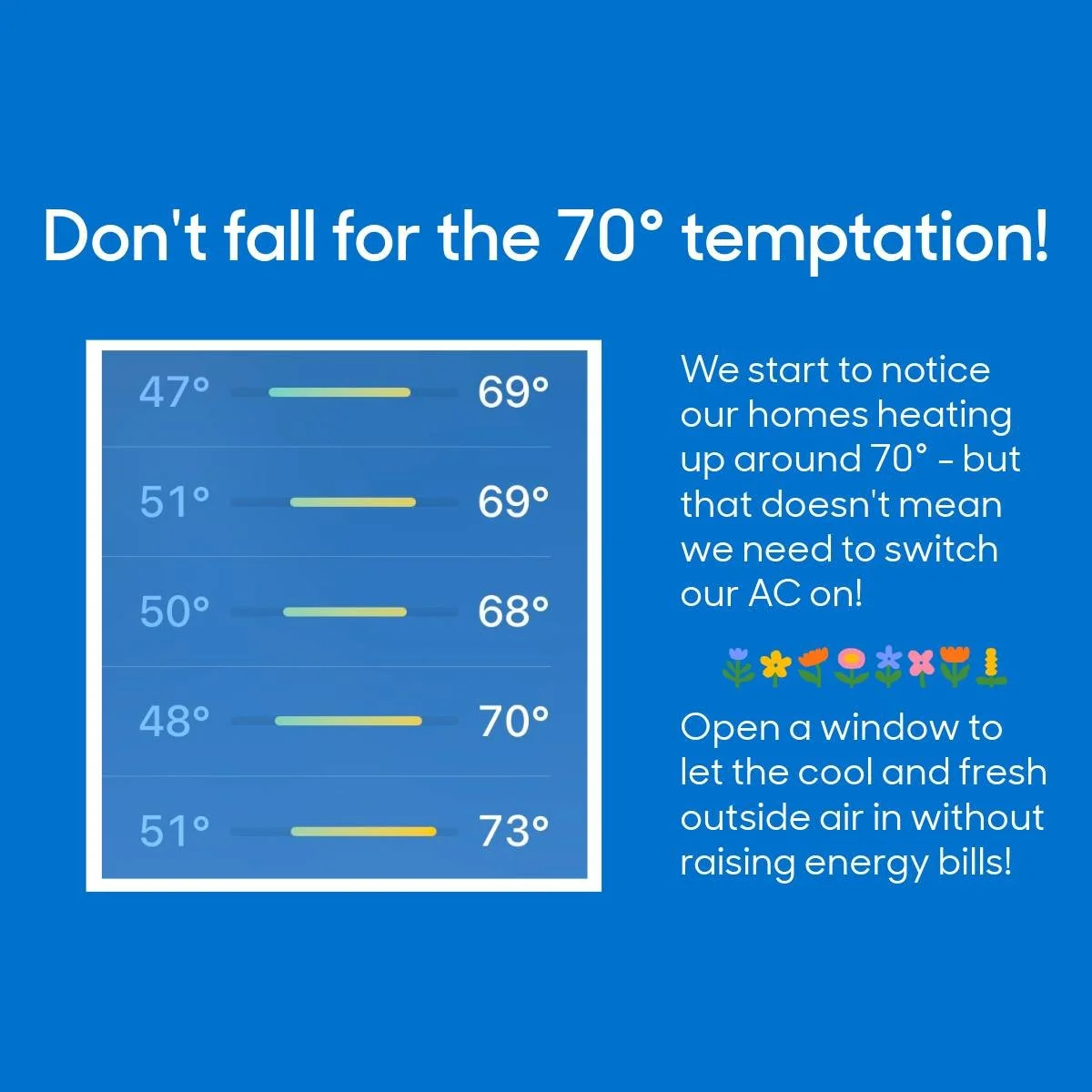
Don’t Fall for the 70° Temptation: How to Save Energy During Spring Weather

Spring in West Tennessee and North Mississippi is one of the best times of the year.

Mild mornings, comfortable afternoons, and that perfect stretch of weather where you can finally enjoy being outside again — homeowners in Counce, Pickwick, Savannah, Hardin County, Corinth, MS, and surrounding areas know exactly what we’re talking about.

But here’s something many people don’t realize:

That perfect 70° weather can actually be one of the easiest times to save money on your energy bills — if you use it the right way.

The 70° Trap: Why It Happens

When temperatures start creeping into the upper 60s and low 70s, it’s tempting to turn on your air conditioner for quick comfort.

But in many cases, your home doesn’t actually need mechanical cooling yet.

That’s what we call the “70° temptation” — flipping on the AC out of habit instead of necessity.

Why You Don’t Always Need the AC

During spring, outdoor temperatures are often naturally comfortable.

That means you can cool your home without using your HVAC system at all.

Using your AC too early in the season can:

  • Increase energy bills unnecessarily

  • Add wear and tear to your system

  • Shorten equipment lifespan over time

The Smarter Alternative: Use Fresh Air

Instead of turning on your AC, take advantage of the weather.

Open Your Windows

Letting fresh air circulate through your home can:

✔ Naturally cool your space
✔ Improve indoor air quality
✔ Reduce reliance on your HVAC system

Create Cross Ventilation

For even better results, open windows on opposite sides of your home.

This allows air to flow through, pushing warm air out and bringing cooler air in.

Use Ceiling Fans

Fans help move air throughout your home, making it feel cooler without lowering the thermostat.

When to Use Your AC

Of course, there will still be days when your AC is needed.

You may want to turn it on when:

  • Humidity becomes uncomfortable

  • Indoor temperatures continue to rise

  • Airflow alone isn’t enough to cool your home

The key is knowing when to rely on your system — and when to let nature do the work.

Why This Matters for Your Energy Bills

Using natural ventilation instead of your AC, even for a few weeks in spring, can lead to:

  • Lower monthly energy costs

  • Reduced system runtime

  • Less wear on HVAC components

Small changes during these transitional seasons can add up over time.

Extend the Life of Your HVAC System

Every time your system runs, it experiences wear.

By giving it a break during mild weather, you can:

  • Extend its lifespan

  • Reduce the likelihood of breakdowns

  • Improve long-term efficiency

Enjoy the Season — and the Savings

Spring is one of the few times of the year when comfort and energy savings go hand in hand.

For homeowners across West Tennessee and North Mississippi, taking advantage of mild temperatures is one of the simplest ways to reduce energy use.

Want More Energy-Saving Tips?

If you’re looking for more ways to improve efficiency and lower your energy bills, there are plenty of simple strategies you can start using today.

👉 Learn more here:
http://tva.me/JpTp50YyjZt

Make the Most of Spring Comfort

Don’t let perfect weather go to waste.

Before you reach for the thermostat, consider opening a window and letting fresh air do the work.

📞 Harbin Heating & Air Conditioning — 731-689-3651

Sometimes the best way to stay comfortable is the simplest one.

Why Your Hot Water Runs Out Faster in Spring — And What It Means for Your System

If it feels like your hot water isn’t lasting as long as it used to, you’re not imagining things.

Across West Tennessee and North Mississippi, homeowners in Counce, Pickwick, Savannah, Hardin County, Corinth, MS, and surrounding areas often notice changes in hot water performance during the spring months.

While it may seem like a sudden issue, there are several reasons why your water heater might be struggling this time of year.

Why Spring Can Impact Your Hot Water

Spring brings changes in both temperature and daily routines.

These changes can affect how your water heater performs.

Increased Household Activity

As the weather warms up, many households see increased activity:

  • More outdoor work and cleanup

  • More showers and laundry

  • Guests or seasonal routines

This increase in demand can put extra strain on your water heater.

Groundwater Temperature Changes

In early spring, incoming water can still be quite cold.

Your water heater has to work harder to raise the temperature to your desired level.

This can result in:

  • Longer heating times

  • Reduced available hot water

  • Increased energy use

Seasonal Maintenance (or Lack of It)

If your water heater hasn’t been maintained recently, spring is often when performance issues start to show.

Sediment buildup and worn components can reduce efficiency and capacity.

Common Causes of Reduced Hot Water

If your hot water is running out faster than normal, here are some likely causes:

Sediment Buildup

Minerals in your water settle at the bottom of the tank over time.

This buildup:

  • Reduces the amount of usable hot water

  • Makes heating less efficient

  • Causes the system to work harder

Aging System

Most water heaters last around 8–12 years.

As they age, they lose efficiency and struggle to keep up with demand.

Failing Heating Elements or Burners

If components inside the system begin to wear out, your water heater may:

  • Heat water more slowly

  • Deliver less hot water

  • Provide inconsistent temperatures

Tank Size Limitations

Your household’s hot water needs may have increased over time.

If your current tank is too small, it may simply not be able to keep up.

Signs It May Be Time for Service or Replacement

Watch for these warning signs:

  • Running out of hot water quickly

  • Fluctuating water temperatures

  • Strange noises from the tank

  • Rust-colored water

  • Rising energy bills

These are often early indicators that your system needs attention.

How to Improve Hot Water Performance

There are a few steps you can take to improve performance:

Flush the Tank

Removing sediment buildup helps restore efficiency and capacity.

Adjust Temperature Settings

Setting your water heater to around 120°F can improve performance and efficiency.

Schedule Professional Maintenance

A technician can inspect your system and address hidden issues before they become major problems.

Consider Upgrading Your System

If your water heater is older or struggling, upgrading to a newer model can provide:

✔ More consistent hot water
✔ Improved energy efficiency
✔ Faster recovery times
✔ Lower operating costs

Don’t Let Small Problems Turn Into Big Ones

What starts as a minor inconvenience — like running out of hot water — can turn into a complete system failure if ignored.

Spring is the perfect time to address these issues before they get worse.

Get Reliable Hot Water Back

If your hot water isn’t lasting like it used to, it may be time to have your system evaluated.

For homeowners in West Tennessee and North Mississippi, addressing the issue early can restore comfort and prevent unexpected breakdowns.

📞 Harbin Heating & Air Conditioning — 731-689-3651

Don’t settle for short showers — get the reliable hot water your home needs.

How Long Can You Run a Home Generator During an Outage? What Homeowners Should Expect

When the power goes out, one of the first questions homeowners ask is:

How long can my generator actually run?

In West Tennessee and North Mississippi, where storms can cause extended outages, understanding generator runtime is essential for planning and peace of mind.

The Answer Depends on Your Setup

There’s no one-size-fits-all answer — generator runtime depends on several factors:

  • Fuel type

  • Generator size

  • Power demand

  • Maintenance condition

Let’s break it down.

Fuel Type Makes a Big Difference

Natural Gas Generators

Natural gas generators are connected directly to your home’s gas line.

This means:

✔ Continuous fuel supply
✔ No need for refueling
✔ Ideal for long-term outages

As long as the gas supply is available, these systems can run indefinitely.

Propane Generators

Propane generators rely on a storage tank.

Runtime depends on:

  • Tank size

  • Generator load

Larger tanks can support longer runtimes, but eventually will need refilling.

Portable Gas Generators

Portable units run on gasoline and typically operate for:

  • 8–12 hours per tank

They require frequent refueling and manual operation.

Power Demand Impacts Runtime

The more you power, the more fuel your generator uses.

For example:

  • Running essential items only = longer runtime

  • Powering your entire home = higher fuel usage

Managing your load can help extend runtime during outages.

Maintenance Matters

A well-maintained generator will run more efficiently and reliably.

Regular maintenance helps:

  • Prevent breakdowns

  • Improve fuel efficiency

  • Ensure consistent performance

Neglected systems may not run as long or as smoothly.

What to Expect During an Extended Outage

With a properly installed standby generator, homeowners can expect:

✔ Automatic startup during outages
✔ Continuous power for essential systems
✔ Reliable operation for hours — or even days

This is especially important during severe weather events in West Tennessee and North Mississippi.

Why More Homeowners Are Choosing Standby Generators

As outages become more common, many homeowners are upgrading to standby systems for:

  • Convenience

  • Reliability

  • Safety

  • Long-term protection

Knowing your home can stay powered during an outage provides peace of mind.

Be Prepared Before the Next Storm

Understanding how your generator works — and how long it can run — is key to staying prepared.

For homeowners in Counce, Pickwick, Savannah, Hardin County, Corinth, MS, and surrounding areas, planning ahead ensures you’re ready when the power goes out.

📞 Harbin Heating & Air Conditioning — 731-689-3651

Stay powered, stay comfortable, and stay prepared — no matter how long the outage lasts.

Why Some Rooms in Your Home Never Feel the Same Temperature — And How to Fix It

If you have a room in your house that’s always too hot… or too cold… you’re not alone.

Across West Tennessee and North Mississippi, homeowners in Counce, Pickwick, Savannah, Hardin County, Corinth, MS, and surrounding areas deal with uneven temperatures all the time — especially as we move into spring and early summer.

The frustrating part? Your HVAC system may be working just fine.

So why does one room feel perfect while another doesn’t?

Why Uneven Temperatures Happen

Most homes aren’t perfectly balanced when it comes to airflow and insulation.

Even small differences can lead to noticeable comfort issues.

Airflow Problems

Your HVAC system relies on proper airflow to distribute conditioned air evenly.

If airflow is restricted, certain rooms may not receive enough air.

Common causes include:

  • Closed or blocked vents

  • Dirty air filters

  • Ductwork issues

Ductwork Imbalances

Your duct system is designed to distribute air throughout your home — but over time, problems can develop.

These include:

  • Leaky ducts

  • Poor duct design

  • Sections that deliver too much or too little air

This can cause some rooms to feel comfortable while others don’t.

Insulation Differences

Not all parts of your home are insulated equally.

Rooms above garages, bonus rooms, and additions often have less insulation.

This leads to:

  • Heat gain in summer

  • Heat loss in winter

  • Inconsistent temperatures

Sun Exposure

Rooms that get more direct sunlight naturally heat up faster.

Without proper insulation or airflow, these areas can become significantly warmer than the rest of the house.

System Size and Design

Sometimes the issue comes down to the HVAC system itself.

If the system isn’t properly sized or designed for your home, it may struggle to evenly distribute air.

How to Fix Uneven Temperatures

The good news is that there are several ways to improve comfort throughout your home.

Replace Your Air Filter

A clean filter improves airflow and helps your system distribute air more effectively.

Check Your Vents

Make sure vents are open, unobstructed, and positioned correctly.

Seal and Inspect Ductwork

Addressing leaks and improving duct design can significantly improve airflow balance.

Improve Insulation

Adding insulation to problem areas helps maintain consistent temperatures.

Consider Zoned Solutions or Mini-Splits

For rooms that are consistently uncomfortable, solutions like ductless mini-splits or zoning systems allow for targeted temperature control.

Why It Matters

Uneven temperatures don’t just affect comfort — they can also:

  • Increase energy usage

  • Put extra strain on your HVAC system

  • Lead to higher utility bills

Fixing the problem helps your entire system work more efficiently.

Get Consistent Comfort Throughout Your Home

If you’re tired of dealing with hot and cold spots, it may be time to take a closer look at your system.

For homeowners across West Tennessee and North Mississippi, improving airflow and system balance can make a noticeable difference.

📞 Harbin Heating & Air Conditioning — 731-689-3651

Comfort shouldn’t vary from room to room — your whole home should feel just right.

Ready to Start Saving? How a Home Energy Evaluation Helps You Cut Costs and Boost Comfort

If you’ve been thinking about lowering your energy bills but aren’t sure where to start — you’re not alone.

Across West Tennessee and North Mississippi, homeowners in Counce, Pickwick, Savannah, Hardin County, Corinth, MS, and surrounding areas are looking for ways to save energy, improve comfort, and make smarter decisions about their homes.

The challenge isn’t wanting to save money…
It’s knowing where your home is losing energy in the first place.

That’s where a home energy evaluation comes in.

What Is a Home Energy Evaluation?

A home energy evaluation is a professional assessment led by a TVA-certified home energy advisor.

Instead of guessing, the advisor takes a detailed look at how your home uses energy — and where it may be wasting it.

This includes evaluating:

  • Your HVAC system

  • Insulation levels

  • Air leaks

  • Ductwork efficiency

  • Overall home performance

The goal is simple: identify opportunities to save energy and money.

Why Most Homes Are Losing More Energy Than You Think

Many homes have hidden inefficiencies that go unnoticed for years.

These can include:

  • Poor insulation in attics or walls

  • Air leaks around windows and doors

  • Leaky or poorly sealed ductwork

  • HVAC systems working harder than necessary

Even small inefficiencies can add up over time, leading to higher energy bills and reduced comfort.

What You’ll Learn from an Energy Evaluation

One of the biggest benefits of a home energy evaluation is clarity.

Instead of guessing what upgrades to make, you’ll receive:

✔ A clear understanding of your home’s energy use
✔ Identification of problem areas
✔ Recommendations for improvements
✔ A prioritized plan for upgrades

This helps you focus on changes that actually make a difference.

How This Translates Into Real Savings

Once you understand where your home is losing energy, even small improvements can lead to noticeable results.

Homeowners often see:

  • Lower monthly energy bills

  • Improved indoor comfort

  • More consistent temperatures

  • Reduced strain on HVAC systems

Over time, these savings can add up significantly.

Why Spring Is the Best Time to Schedule

Spring is one of the best times to schedule a home energy evaluation.

As temperatures rise across West Tennessee and North Mississippi, your HVAC system is about to work harder than it has all year.

Scheduling now allows you to:

  • Identify inefficiencies before peak summer demand

  • Make improvements ahead of rising energy costs

  • Avoid unnecessary strain on your system

  • Stay more comfortable during hot weather

Small Fixes, Big Impact

Many homeowners are surprised to learn that some of the most effective improvements are also the simplest.

Things like:

  • Sealing air leaks

  • Improving insulation

  • Adjusting HVAC settings

  • Sealing ductwork

Can all lead to meaningful savings without major renovations.

Take the Guesswork Out of Energy Savings

If you’ve ever wondered:

  • “Why are my energy bills so high?”

  • “Why does my home feel uneven?”

  • “Is my HVAC system working too hard?”

A home energy evaluation can provide the answers.

Start Saving Today

If you’re ready to uncover your home’s hidden money-saving opportunities, now is the time to take action.

👉 Schedule your home energy evaluation here:
http://tva.me/3SJC50Yyk3h

Improve Comfort, Reduce Costs, and Take Control

For homeowners in Counce, Pickwick, Savannah, Hardin County, Corinth, MS, and across West Tennessee and North Mississippi, a home energy evaluation is one of the smartest first steps toward a more efficient home.

📞 Harbin Heating & Air Conditioning — 731-689-3651

Stop guessing — start saving. Your home may be wasting energy in ways you don’t even realize.

Water Heater Repair vs Replacement: How to Know Which Option Saves You More Money

When your water heater starts acting up, one big question comes up fast:

Should you repair it… or replace it?

For homeowners across West Tennessee and North Mississippi, including Counce, Pickwick, Savannah, Hardin County, Corinth, MS, and surrounding areas, this decision can impact both your comfort and your wallet.

Making the right choice depends on a few key factors — and knowing what to look for can help you avoid wasting money on the wrong solution.

Start with the Age of Your Water Heater

One of the biggest deciding factors is how old your system is.

  • 0–7 years old: Repair is usually the best option

  • 8–12 years old: Depends on condition and repair cost

  • 12+ years old: Replacement is often more cost-effective

As water heaters age, they become less efficient and more prone to failure.

When Repair Makes Sense

Repairs can be a good option if the issue is minor and your system is still relatively new.

Common repairable issues include:

  • Faulty heating elements

  • Thermostat problems

  • Pilot light or ignition issues

  • Minor leaks from fittings or valves

These repairs are typically less expensive and can extend the life of your system.

When Replacement Is the Better Option

Sometimes, replacing your water heater is the smarter long-term decision.

You should strongly consider replacement if:

  • The tank itself is leaking

  • The system requires frequent repairs

  • You’re running out of hot water quickly

  • Energy bills are rising

  • The unit is over 10–12 years old

Once the tank begins to fail, repairs are usually only temporary.

Comparing Costs: Repair vs Replacement

At first glance, repair may seem like the cheaper option — but that’s not always the case.

Repair Costs Add Up When:

  • Problems keep coming back

  • Multiple components are failing

  • Efficiency continues to decline

Replacement Can Save Money When:

  • You avoid repeated service calls

  • You upgrade to a more efficient system

  • You reduce monthly energy costs

Looking at the long-term cost, replacement often provides better value for aging systems.

Efficiency Matters More Than You Think

Older water heaters are typically much less efficient than modern systems.

Upgrading to a newer model can:

  • Use less energy

  • Heat water more quickly

  • Provide more consistent performance

  • Lower utility bills over time

For homeowners in West Tennessee and North Mississippi, where energy costs can fluctuate, efficiency upgrades can make a noticeable difference.

Tank vs Tankless: A Chance to Upgrade

If you decide to replace your system, you also have the option to upgrade.

Traditional Tank Systems

  • Lower upfront cost

  • Reliable performance

  • Good for moderate usage

Tankless Systems

  • Endless hot water

  • Higher efficiency

  • Longer lifespan

  • Space-saving design

Replacement gives you the opportunity to choose a system that better fits your current needs.

Warning Signs You Shouldn’t Ignore

If you notice any of the following, it may be time to replace rather than repair:

  • Rust-colored water

  • Water pooling around the unit

  • Strange noises (popping or rumbling)

  • Inconsistent water temperature

  • Frequent breakdowns

These are often signs that the system is nearing failure.

Avoid Emergency Replacement

One of the biggest advantages of planning ahead is avoiding emergency situations.

When a water heater fails unexpectedly, you may have:

  • Limited time to choose a replacement

  • Higher costs due to urgency

  • Fewer options available

Replacing your system before failure allows you to make a more informed decision.

Make the Right Choice for Your Home

Every home is different, and the best decision depends on your system’s condition, age, and performance.

For homeowners in Counce, Pickwick, Savannah, Hardin County, Corinth, MS, and across West Tennessee and North Mississippi, evaluating your options early can help you save money and avoid stress.

Get Reliable Hot Water — Without the Guesswork

If your water heater isn’t performing like it used to, it may be time to have it evaluated.

A professional assessment can help determine whether repair or replacement is the better option for your home.

📞 Harbin Heating & Air Conditioning — 731-689-3651
Make the smart choice today — and keep the hot water flowing without unexpected surprises.