Please ensure Javascript is enabled for purposes of website accessibility

Why Your Heating System May Struggle After an Ice Storm (Even If It Ran Fine Before)

After an ice storm moves out of West Tennessee and North Mississippi, many homeowners assume that if their heating system kept running during the storm, everything is fine. Unfortunately, that’s not always the case.

Across Counce, Pickwick, Savannah, Hardin County, Corinth, MS, and surrounding North Mississippi communities, it’s common for heating systems to struggle after the storm — sometimes days or even weeks later.

Here’s why post–ice storm issues happen, even when everything seemed normal at first.

Ice Pushes Heating Systems Beyond Normal Limits

Ice storms force heating systems to operate under extreme conditions. Heat pumps, in particular, may:

  • Run for extended periods without rest

  • Enter frequent defrost cycles

  • Struggle to pull heat from ice-covered outdoor air

Even if the system didn’t shut down, that level of stress can weaken components and reduce efficiency once the storm passes.

Defrost Cycles Can Throw Systems Off Balance

During an ice storm, heat pumps rely heavily on defrost cycles to keep the outdoor coil from freezing solid. After the ice melts, some systems have trouble returning to normal operation.

You may notice:

  • Cool or lukewarm air coming from vents

  • Longer run times with little temperature improvement

  • Steam or frequent cycling from the outdoor unit

These are signs the system may still be compensating for storm-related strain.

Power Outages Can Cause Delayed Electrical Issues

Ice storms often bring power flickers or full outages. When electricity is restored, electrical components inside HVAC systems don’t always recover cleanly.

Delayed problems can include:

  • Sensors reading incorrectly

  • Contactors or relays wearing out

  • Systems starting and stopping unpredictably

These issues often don’t show up immediately — they reveal themselves after several days of normal operation.

Airflow and Efficiency Can Quietly Decline

Ice, falling branches, and debris can partially block outdoor units or damage airflow around them. Even minor obstructions can:

  • Reduce system efficiency

  • Cause uneven heating inside the home

  • Increase energy usage without obvious failure

If your home feels colder than usual after the storm, airflow restrictions may be part of the problem.

Why Comfort Problems Appear After Things “Settle Down”

Once temperatures stabilize, homeowners expect heating systems to perform better — not worse. When comfort issues show up after the storm, it’s often because the system is compensating for hidden damage or efficiency loss.

That’s why searches for “heating system not working after ice storm near me” spike in Hardin County and North Mississippi days after winter weather clears.

What Homeowners Should Do Next

If your heating system:

  • Runs constantly

  • Struggles to keep rooms warm

  • Sounds different than before

  • Causes higher-than-normal energy bills

it’s time for a professional inspection.

Catching storm-related issues early can prevent emergency repairs and help your system recover before the next cold snap.

Trusted Post-Storm HVAC Help

At Harbin Heating & Air Conditioning, we help homeowners throughout Counce, Pickwick, Savannah, Hardin County, Corinth, MS, and North Mississippi evaluate heating systems after severe winter weather.

📞 Call 731-689-3651 to schedule a post–ice storm heating system check
📍 Harbin Heating & Air Conditioning • 5910 Hwy 57 • Counce, TN 38326

We’ll help your system get back to reliable, efficient operation — so you’re not caught off guard when winter isn’t quite done yet.


Ice Storm Damage Can Linger: HVAC Problems That Often Show Up Days Later

When an ice storm finally clears out of West Tennessee and North Mississippi, it’s easy to think the worst is over. Roads reopen, power comes back on, and homes start warming up again. But for many homeowners in Counce, Pickwick, Savannah, Hardin County, Corinth, MS, and surrounding areas, HVAC problems don’t always show up right away.

In fact, some of the most common heating system issues appear days after an ice storm — once systems have had time to run under stress.

Here’s what to watch for in the aftermath.

1. Heat Pumps Stuck in Defrost Mode

Ice storms often force heat pumps to work overtime. Ice buildup on the outdoor unit can trigger frequent defrost cycles, and in some cases, systems struggle to return to normal operation even after temperatures rise.

Signs of defrost-related problems include:

  • The system blowing cool air unexpectedly

  • Longer run times with little temperature change

  • The outdoor unit steaming or cycling more than usual

If defrost cycles don’t normalize after the ice melts, professional service is usually needed.

2. Electrical Components Stressed by Power Outages

Power flickers and outages during ice storms can be rough on HVAC systems. When electricity is restored, components may not respond the way they should.

Delayed issues can include:

  • Burned contactors or relays

  • Tripped breakers that won’t stay reset

  • Systems that won’t restart consistently

These problems often surface days later, especially after multiple on-and-off cycles.

3. Airflow Restrictions From Storm Debris

Falling ice, branches, and debris can partially block outdoor units or damage surrounding airflow paths. Even small obstructions can reduce efficiency and force your system to work harder.

Watch for:

  • Weak airflow inside the home

  • Longer heating cycles

  • New noises from the outdoor unit

Airflow problems don’t always shut a system down — they quietly drive up energy use instead.

4. Short Cycling After the Storm

Short cycling happens when a system turns on and off more frequently than it should. After an ice storm, this can be caused by sensor issues, electrical damage, or efficiency loss.

Short cycling leads to:

  • Uneven heating

  • Increased wear on components

  • Higher energy bills

Left unaddressed, it can shorten the lifespan of your system.

5. Rising Energy Bills Once Things “Seem Normal”

One of the most overlooked post-storm warning signs is a spike in energy usage after temperatures stabilize.

If your bill jumps following an ice storm in Hardin County or North Mississippi, your system may still be compensating for storm-related damage or inefficiency — even if it appears to be running.

Why These Issues Don’t Show Up Immediately

Ice storms push heating systems to their limits. Prolonged runtimes, ice buildup, and electrical interruptions weaken components that may not fail right away.

That’s why homeowners often experience:

  • Breakdowns days later

  • Comfort issues weeks later

  • Higher costs without an obvious cause

Post-storm HVAC inspections help catch these issues early.

When It’s Time to Call a Professional

If you notice any of the following after an ice storm, it’s time to schedule service:

  • Unusual noises

  • Uneven or inconsistent heating

  • Systems that run constantly or short cycle

  • Energy bills climbing unexpectedly

Early attention can prevent emergency repairs during the next cold snap.

Local HVAC Help You Can Count On

At Harbin Heating & Air Conditioning, we help homeowners across West Tennessee and North Mississippi identify and fix storm-related HVAC problems before they get worse.

📞 Call 731-689-3651 to schedule a post–ice storm HVAC inspection
📍 Serving Counce, Pickwick, Savannah, Hardin County, Corinth, MS, and surrounding North Mississippi communities

We’re here to help your system recover safely and efficiently — even after the storm has passed.

After the Ice Storm: What Homeowners in West Tennessee & North Mississippi Should Check First

Ice storms leave more behind than slick roads and fallen branches. Once the weather finally moves out of West Tennessee and North Mississippi, many homeowners in Counce, Pickwick, Savannah, Hardin County, Corinth, MS, and surrounding areas start discovering problems that didn’t show up during the storm itself.

Even if your heating system kept running through the ice, the aftermath is when hidden issues often appear. Here’s what to check first once conditions are safe — and what shouldn’t be ignored.

1. Inspect Outdoor HVAC Equipment for Ice Damage

Heat pumps and outdoor units take the brunt of winter storms. After an ice event, look for:

  • Ice buildup still clinging to the unit

  • Bent fins or panels from falling ice or branches

  • Debris blocking airflow around the system

Never try to chip ice off your unit. That can damage coils and fins. If ice hasn’t melted naturally after temperatures rise, it’s time to call a professional.

2. Listen for Unusual Noises Once Power Is Restored

Power outages and fluctuations during ice storms can put extra strain on HVAC components. When your system comes back on, listen for:

  • Grinding or rattling sounds

  • Loud humming or buzzing

  • Short cycling (turning on and off frequently)

These noises often point to electrical or mechanical stress caused during outages.

3. Check Indoor Comfort Room by Room

Ice storms often expose airflow problems that were already developing.

Pay attention to:

  • Cold spots or rooms that won’t warm up

  • Weak airflow from vents

  • Longer run times than usual

If your system is running but comfort feels uneven, ice-related strain or airflow restrictions may be to blame.

4. Watch for Spikes in Energy Bills

After severe winter weather, many homeowners across Hardin County and North Mississippi notice higher energy usage — even when temperatures stabilize.

This can happen when:

  • Ice interferes with heat pump efficiency

  • Defrost cycles run more often than normal

  • Components were damaged during the storm

Higher bills after an ice storm are a strong sign your system isn’t operating efficiently.

5. Don’t Ignore Frozen or Thawing Areas of the Home

While not strictly HVAC-related, frozen pipes and cold interior walls often go hand-in-hand with heating system strain.

If you experienced:

  • Frozen pipes

  • Extremely cold rooms

  • Drafts after the storm

your heating system may have been pushed beyond normal limits — and should be inspected.

Why Ice Storm Damage Often Shows Up Later

Many storm-related HVAC issues don’t appear immediately. Ice, power interruptions, and prolonged runtimes can weaken components that fail days — or even weeks — later.

That’s why post-storm inspections are so important, especially before the next cold snap hits.

When to Call for Professional Help

If you notice:

  • Ice that won’t melt from your outdoor unit

  • Unusual noises

  • Uneven heating

  • Rising energy costs

it’s best to have your system checked sooner rather than later.

Trusted Local Help After the Storm

At Harbin Heating & Air Conditioning, we help homeowners recover after severe winter weather with honest inspections and dependable service.

📞 Call 731-689-3651 to schedule a post–ice storm HVAC check
📍 Serving Counce, Pickwick, Savannah, Hardin County, Corinth, MS, and all of North Mississippi

We’re here to help your home get back to normal — safely, efficiently, and with confidence — after the storm moves on.

Repair or Replace? How to Decide When Your HVAC System Is Over 10 Years Old

If your heating or cooling system is over 10 years old, you’ve probably already discovered that decisions around repairs aren’t simple anymore.

Do you fix what’s broken and hope it lasts another season — or start thinking long-term before repair costs and energy bills climb even higher?

Homeowners across Counce, Pickwick, Savannah, Hardin County, Corinth, Mississippi, and throughout North Mississippi face this question every year, especially when systems start acting up during peak winter or summer demand.

Before you call anyone, it helps to slow down and look at the full picture.

Why the 10-Year Mark Changes Everything

Most HVAC systems are designed to last around 10–15 years. Once a system crosses that 10-year threshold, several things begin to shift at the same time:

  • Efficiency starts to decline

  • Parts experience more wear and tear

  • Repairs become more frequent

  • Energy costs often increase

Even if the system still runs, it’s usually working harder — and costing more — to deliver the same comfort.

That’s why decisions after year ten are rarely black and white.

Short-Term Repairs vs. Long-Term Costs

A repair might feel like the fastest and cheapest option, especially during extreme weather. But short-term fixes don’t always tell the whole story.

Ask yourself:

  • How often has this system needed repairs in the past few years?

  • Are energy bills rising even though usage hasn’t changed?

  • Does the home still heat and cool evenly?

A single repair might make sense. Repeated repairs often don’t — especially when efficiency losses continue to drive up monthly utility costs.

Efficiency Is the Hidden Cost

One of the most overlooked factors in the repair-vs-replace decision is long-term efficiency.

Older systems:

  • Run longer to maintain temperature

  • Cycle more frequently

  • Consume more energy during peak seasons

That inefficiency quietly adds up month after month. Over time, higher energy bills can outweigh the cost of upgrading — even if repairs seem cheaper upfront.

Homeowners in West Tennessee and North Mississippi often notice this most during winter cold snaps and summer heat waves, when systems are pushed the hardest.

Why Doing the Math Matters

Instead of guessing, it helps to actually compare:

  • Repair costs over the next few years

  • Current energy usage

  • Potential efficiency gains from newer equipment

That’s why this article includes a simple way to run the numbers before making a call.

👉 Compare short-term repair costs vs. long-term efficiency here:
https://bit.ly/4qcBtHW

Seeing the numbers side by side can make the decision much clearer — without pressure.

Planning Ahead Puts You in Control

Waiting until a system fails completely often limits your options and adds stress. Homeowners who plan ahead usually benefit from:

  • More time to evaluate choices

  • Better scheduling flexibility

  • Fewer emergency decisions

  • More predictable long-term costs

Whether you ultimately repair or replace, understanding where your system stands helps you make a confident, informed decision.

Get Honest Guidance From a Local HVAC Team

If you’re weighing your options and want a straightforward opinion, we’re here to help.

📞 Call Harbin Heating & Air Conditioning at 731-689-3651
📍 Serving Counce, Pickwick, Savannah, Hardin County, Corinth, MS, and North Mississippi

We’ll help you evaluate your system, avoid unnecessary repairs, and choose the smartest path forward for your home — now and in the seasons ahead.

Why Rising Energy Bills Can Signal an Inefficient Heating System

If your energy bills seem to climb every winter — even though your habits haven’t changed — your heating system may be trying to tell you something.

Homeowners across Counce, Pickwick, Savannah, and throughout Hardin County often assume higher winter utility costs are unavoidable. While colder temperatures do play a role, steadily rising bills are frequently a sign that a heating system is no longer operating efficiently.

Here’s how higher energy costs can point to a deeper issue with your heating system.

Your Heating System Is Working Harder Than It Should

As heating systems age, efficiency naturally declines. Worn components, restricted airflow, and general wear cause systems to run longer just to maintain the same indoor temperature.

That extra runtime leads to:

  • Increased energy usage

  • Higher monthly utility bills

  • Added strain on already aging equipment

If your system seems to run constantly during cold weather, inefficiency may be the real issue — not the temperature outside.

Short Cycling Wastes Energy

Inefficient heating systems often turn on and off more frequently than designed. This is known as short cycling.

Short cycling can cause:

  • Uneven temperatures throughout the home

  • Higher energy consumption

  • Faster wear on system components

Instead of providing steady heat, the system burns energy starting and stopping repeatedly — driving costs up without improving comfort.

Older Systems Can’t Match Today’s Efficiency Standards

Heating technology has improved significantly over the past decade. Newer systems are designed to deliver better comfort using less energy.

If your heating system is 10–15 years old or more, it may still be functioning but operating far below modern efficiency levels. That efficiency gap becomes especially noticeable during winter when the system runs the most.

Winter Reveals What Mild Weather Hides

During milder seasons, inefficiencies can go unnoticed. Winter forces your heating system to run longer and harder, making small problems impossible to ignore.

That’s why many homeowners begin searching for “why is my heating bill so high near me” once winter sets in — the system’s true performance becomes clear.

What You Can Do About Rising Energy Bills

Rising energy costs don’t always mean immediate replacement, but they do signal the need for an evaluation.

A professional inspection can identify:

  • Efficiency losses

  • Airflow or equipment issues

  • Whether repairs still make sense

  • If planning ahead for replacement could save money

Catching problems early can help prevent emergency repairs and reduce long-term heating costs.

Call a Local HVAC Professional You Can Trust

At Harbin Heating & Air Conditioning, we help homeowners throughout Counce, Pickwick, Savannah, and Hardin County understand what their energy bills are really telling them.

📞 Call 731-689-3651 to schedule a heating system efficiency check
📍 Harbin Heating & Air Conditioning
5910 Hwy 57 • Counce, TN 38326

We’ll help you improve comfort, control energy costs, and make informed decisions for your home — all winter long.

3 Signs It Might Be Time to Rethink Your Heating System

When winter settles in across Counce, Pickwick, Savannah, and throughout Hardin County, your heating system doesn’t get a break. Cold snaps, longer run times, and higher demand can quickly reveal issues that stayed hidden during milder weather.

If your system has felt “off” this winter, it may be time to rethink whether it’s still serving your home well. Here are three clear signs homeowners often notice when a heating system is nearing the end of its usefulness.

1. Repairs Are Becoming a Seasonal Routine

Needing a repair once in a while is normal. Needing one every winter is not.

If you’ve found yourself calling for service year after year — or multiple times in the same season — your heating system may be telling you it’s wearing out. As systems age, components begin to fail more frequently, and repairs become less predictable.

At a certain point, the money spent keeping an older system running can outweigh the value it provides.

2. Your Energy Bills Keep Climbing

Rising winter energy bills are one of the most common warning signs of an inefficient heating system.

If your usage hasn’t changed but your bills keep going up, your system may be:

  • Running longer to maintain temperature

  • Cycling more often than it should

  • Losing efficiency due to age or wear

Older systems often consume more energy just to deliver the same level of comfort — and that inefficiency shows up month after month on your utility bill.

3. Your Home Doesn’t Heat Evenly Anymore

Uneven heating is more than just uncomfortable — it’s a sign your system may be struggling.

Common comfort issues include:

  • Some rooms staying cold while others overheat

  • The system running constantly without reaching the set temperature

  • Drafty or chilly areas no matter how high the thermostat is set

These problems often worsen over time and can indicate deeper issues that repairs may only temporarily solve.

Why Winter Makes These Signs Hard to Ignore

Cold weather pushes your heating system to its limits. Minor inefficiencies that go unnoticed during mild temperatures become obvious when your system runs for hours at a time.

That’s why many homeowners start searching for “heating repair near me” or “HVAC replacement in Hardin County” during winter — it’s when the system’s true condition becomes clear.

What to Do If These Signs Sound Familiar

Not every system showing these signs needs immediate replacement, but they do deserve a closer look.

A professional inspection can help determine:

  • Whether repairs still make sense

  • How much efficiency has been lost

  • If planning ahead could save money and stress

Making a proactive decision now can help you avoid emergency breakdowns later.

Get Honest Guidance From a Local HVAC Team

At Harbin Heating & Air Conditioning, we help homeowners throughout Counce, Pickwick, Savannah, and Hardin County understand what their heating systems are really telling them.

📞 Call 731-689-3651 to schedule a heating system evaluation
📍 Harbin Heating & Air Conditioning
5910 Hwy 57 • Counce, TN 38326

We’ll help you decide whether it’s time to rethink your heating system — so you can stay comfortable all winter and prepared for the seasons ahead.

How Do You Know When a Heating System Is No Longer Worth Repairing?

It’s a question many homeowners across Counce, Pickwick, Savannah, and throughout Hardin County ask every winter:
Should I repair my heating system again — or is it finally time to replace it?

When a heater breaks down in the middle of cold weather, repairing it can feel like the fastest solution. But at some point, repairs stop being practical and start costing more than they’re worth. The key is knowing how to recognize that moment before you pour more money into an aging system.

Here are the main factors that usually tell the story.

1. The Age of Your Heating System

Most heating systems are built to last about 10–15 years with regular maintenance. Once a system reaches that age range, efficiency naturally declines and breakdowns become more common.

Even if an older system is still running, it may:

  • Use more energy to produce the same heat

  • Struggle during cold snaps

  • Require more frequent service calls

If your system is approaching or past that 10–15 year mark, repairs are often a short-term fix — not a long-term solution.

2. Repairs Are Becoming a Regular Expense

An occasional repair is normal. Repeated repairs are a warning sign.

If you’ve needed service:

  • Every winter

  • Multiple times in one season

  • For different components each visit

your system may be reaching the end of its usable life. At that point, repair costs can quietly add up to more than the value of the system itself.

Many homeowners are surprised to realize they’ve spent thousands over a few years just to keep an aging unit running.

3. Energy Bills Keep Rising

One of the clearest signs a heating system may no longer be worth repairing is higher energy bills without a change in usage.

As systems age, they lose efficiency. They run longer, cycle more often, and consume more energy just to maintain comfort. That inefficiency shows up directly on your monthly utility bill.

If your heating costs keep climbing every winter, your system may be costing you money even when it’s technically “working.”

4. Comfort Problems Are Getting Worse

A heating system near the end of its life often struggles to heat a home evenly.

Common signs include:

  • Cold rooms or drafty areas

  • The system running constantly

  • The thermostat never quite reaching the set temperature

These comfort issues usually indicate deeper problems that repairs may only temporarily mask.

5. Repairs Fix the Symptom — Not the Cause

As systems age, repairs tend to address individual failures rather than the overall condition of the equipment. Fixing one part doesn’t stop another from wearing out soon after.

When repairs start feeling like a cycle instead of a solution, replacement is often the smarter, more predictable option.

A Smarter Way to Decide

Repair vs. replacement decisions don’t have to be guesswork. Looking at system age, repair history, and energy costs together helps homeowners make informed decisions — not rushed ones during a breakdown.

Planning ahead often gives you:

  • More equipment options

  • Better scheduling flexibility

  • Less stress during extreme weather

Talk With a Local HVAC Professional You Can Trust

If you’re unsure whether repairing your heating system still makes sense, a professional evaluation can save you time, money, and frustration.

📞 Call Harbin Heating & Air Conditioning at 731-689-3651
📍 Serving Counce, Pickwick, Savannah, and all of Hardin County

We’ll help you understand the condition of your system and decide whether repair or replacement is the smarter move — so you’re not left guessing when winter temperatures drop.

Space Heater Safety Tips Every Homeowner Should Know This Winter

When winter temperatures drop across Counce, Pickwick, and the surrounding Hardin County area, many homeowners turn to space heaters to add warmth to chilly rooms. While space heaters can be helpful, they’re also one of the leading causes of winter house fires when used incorrectly.

If you rely on a space heater — whether in a bedroom, home office, or living area — following a few simple safety guidelines can help keep your home warm without putting your family or property at risk.

Below are essential space heater safety tips every homeowner should keep in mind this winter.

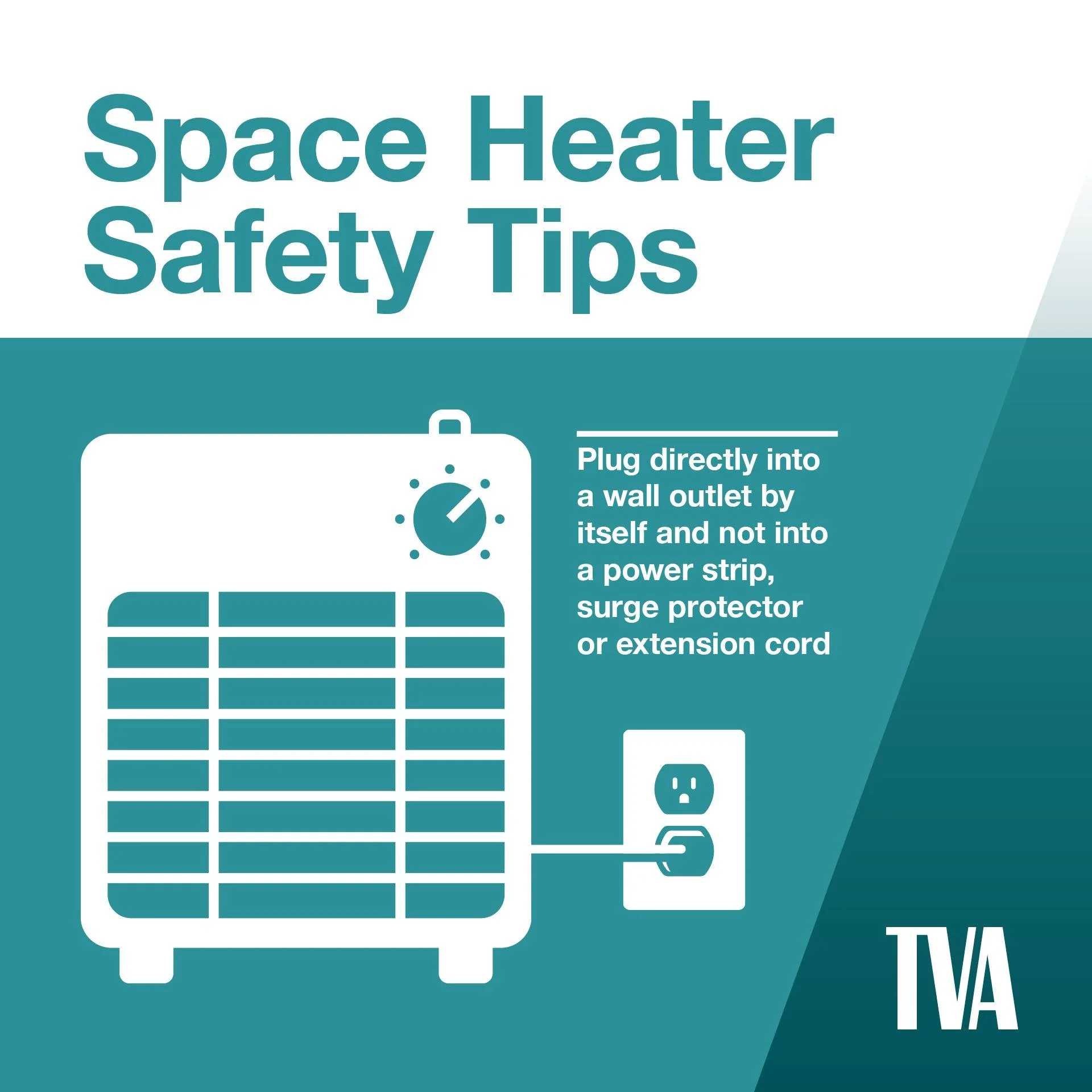
1. Always Plug Space Heaters Directly Into a Wall Outlet

One of the most important — and often overlooked — space heater safety rules is how the heater is powered.

Space heaters should always be plugged directly into a wall outlet. Never plug them into:

  • Power strips

  • Surge protectors

  • Extension cords

These devices aren’t designed to handle the high electrical load space heaters require and can easily overheat, increasing the risk of electrical fires.

If your space heater cord won’t reach a wall outlet safely, it’s best to reposition the heater — not add an extension cord.

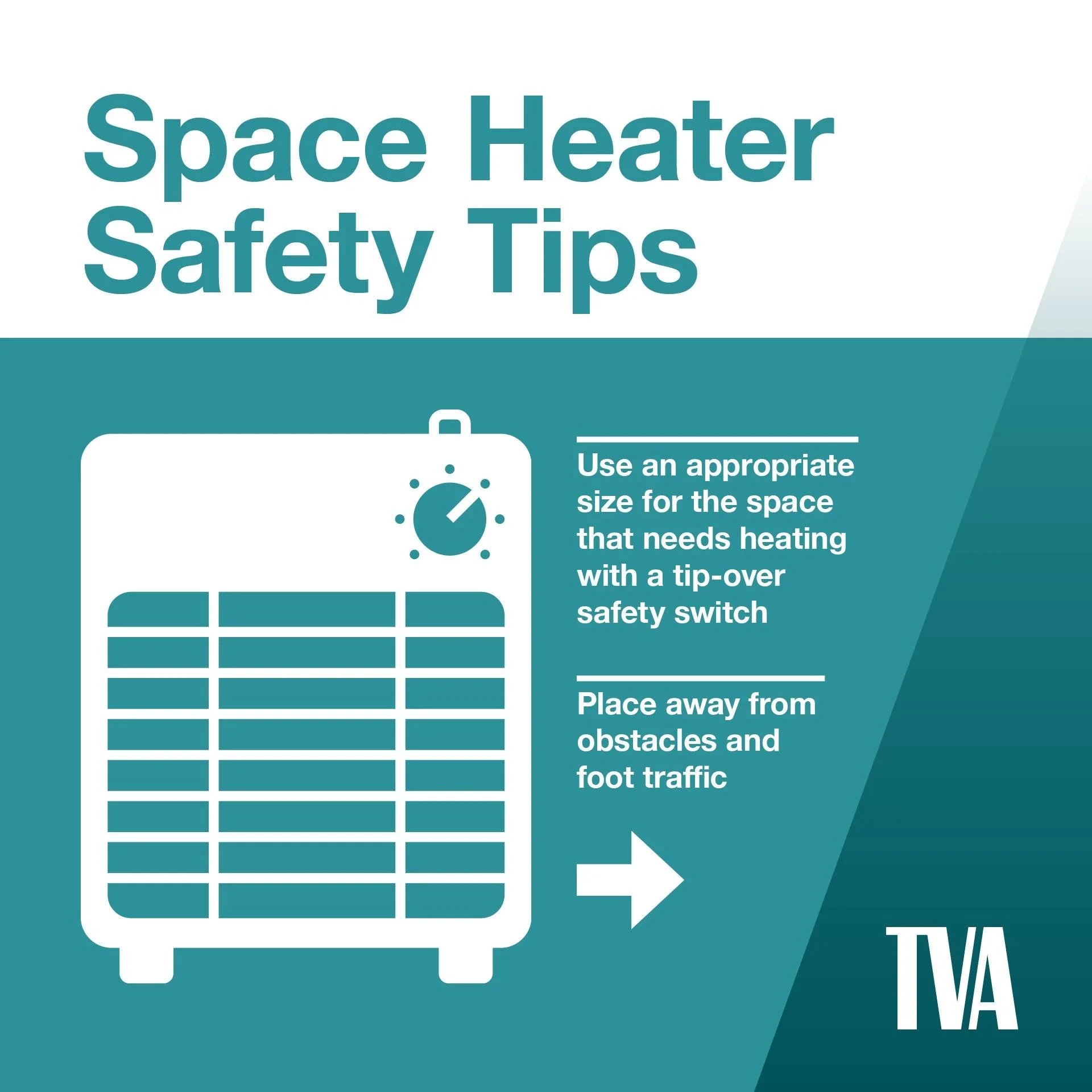
2. Choose the Right Size Heater for the Space

Using the wrong size heater for a room can lead to overheating, wasted energy, and unnecessary wear on the unit.

When shopping for a space heater:

  • Choose a model designed for the size of the room you’re heating

  • Avoid oversized heaters in small spaces

  • Look for models with tip-over safety switches that automatically shut off if the heater is knocked over

This is especially important in homes with pets, children, or high foot traffic.

3. Keep Space Heaters Clear of Obstacles

Space heaters need space — and plenty of it.

Always place heaters:

  • At least 3 feet away from furniture, curtains, bedding, and rugs

  • Out of walkways and high-traffic areas

  • On a flat, stable surface

Never place a space heater on a bed, couch, or near anything that could block airflow or accidentally come into contact with the heating element.

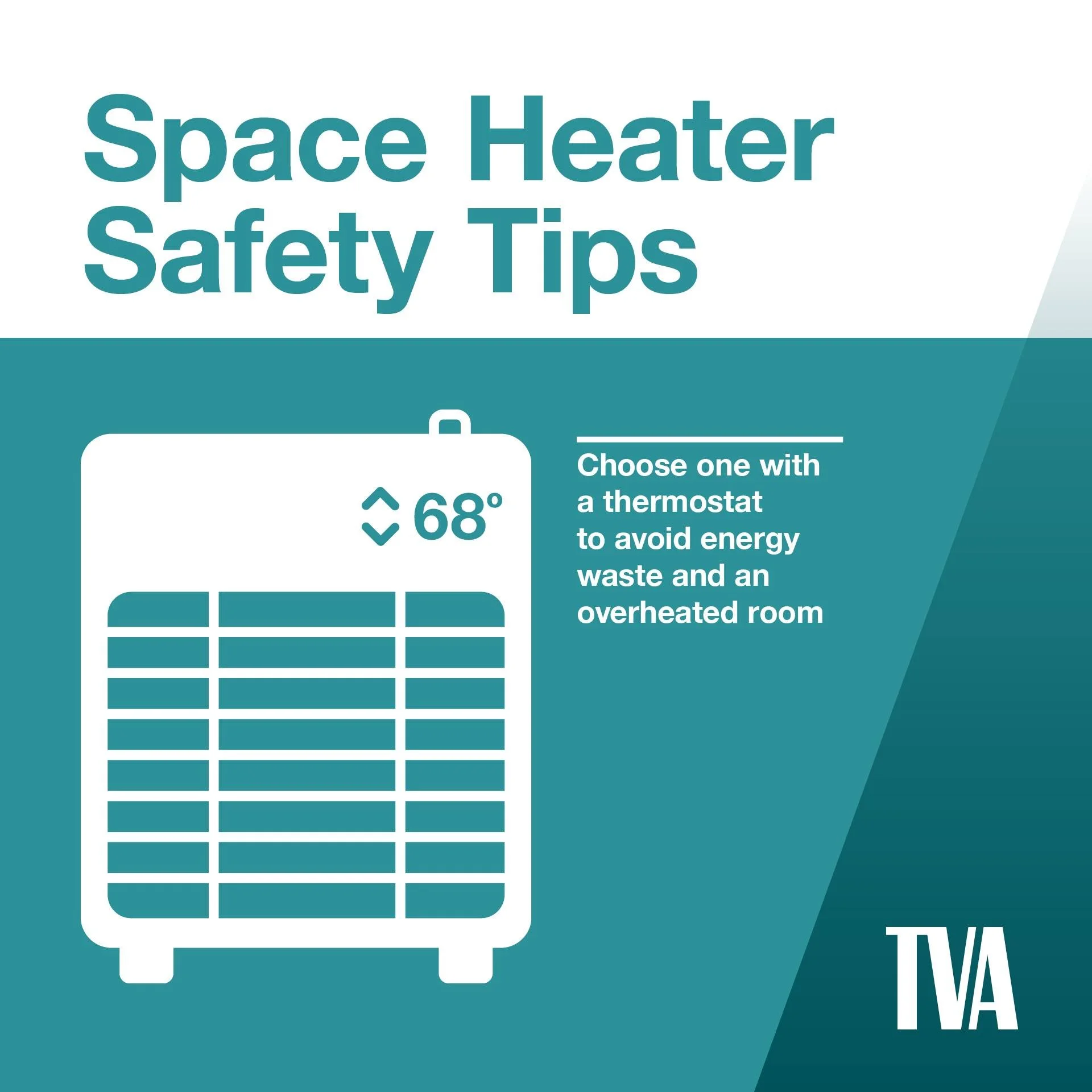
4. Use Heaters With Built-In Thermostats

Space heaters with built-in thermostats offer better temperature control and improved safety.

A thermostat:

  • Prevents rooms from overheating

  • Helps reduce energy waste

  • Automatically shuts off the heater once the desired temperature is reached

Without a thermostat, heaters can run continuously, driving up energy costs and increasing the risk of overheating.

5. Avoid Using Space Heaters as a Long-Term Heating Solution

While space heaters can provide short-term comfort, they aren’t designed to replace a central heating system.

If you find yourself:

  • Relying on multiple space heaters

  • Struggling to heat certain rooms

  • Noticing rising winter energy bills

These may be signs that your main heating system isn’t performing efficiently anymore.

When Space Heaters Signal a Bigger Heating Problem

In many homes across Savannah, Pickwick, and Counce, frequent space heater use is a sign of:

  • Aging heating equipment

  • Uneven heat distribution

  • System inefficiency or airflow issues

Rather than continuing to rely on space heaters year after year, it may be time to have your heating system inspected by a professional.

Stay Safe — and Warm — This Winter

Space heaters can be helpful when used responsibly, but your home’s primary heating system should always be doing the heavy lifting.

If your home feels cold despite running the heat, or if you’re concerned about heating safety and efficiency, we’re here to help.

📞 Call Harbin Heating & Air Conditioning at 731-689-3651
📍 Proudly serving Counce, Pickwick, Savannah, and all of Hardin County

We’ll help make sure your home stays comfortable — and safe — all winter long.